
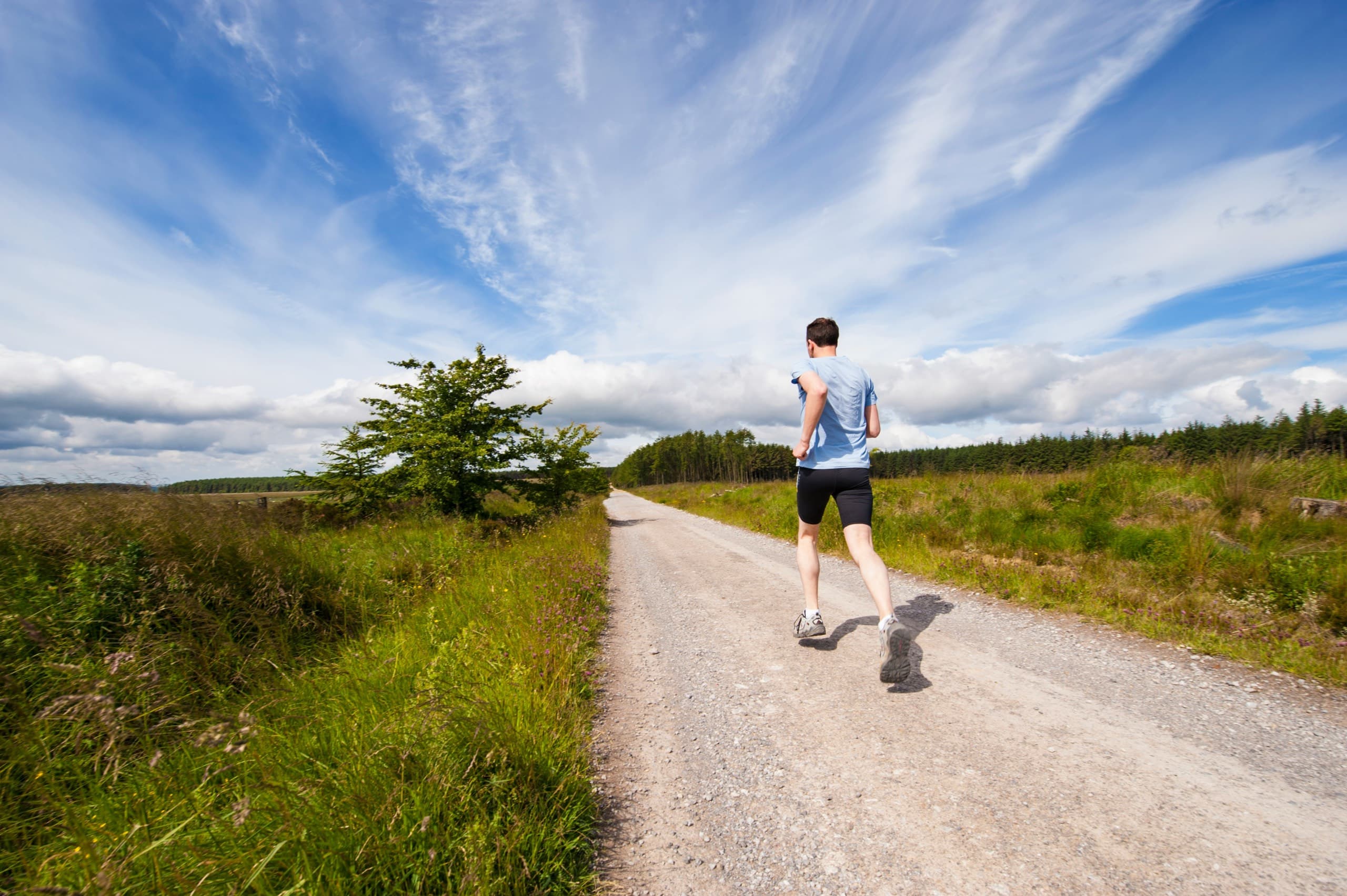
Take a hike: How to get the most benefit from simple walking
Spring is in the air, so it’s time to hit the pavement and get walking. But if you want to get the most benefit from it—it can’t be just any walking. Your posture and position are more important than how fast or how far you go.
First, take a look at how your feet are positioned. Most people walk with their feet too close together. Your feet should be hip width apart so your legs are in line with your hips, giving structural support when energy flows down through your legs. When you start walking with your feet properly spaced—we tell clients to walk like John Wayne—you may feel awkward at first, but don’t let that stop you. It doesn’t look as bad as it feels.
Next, make sure your feet are facing forward in a neutral position. Many people walk with one foot or another turned out or in; you need to keep them both straight, again for proper support.
When you take a stride, make sure you use a heel-to-toe motion, letting the foot expand and make as much contact with the ground as possible. You need to be perfectly centered with the weight on the whole foot and not on one side or the other.
Stride length is the next variable. The length will vary for each person. You need to strike a natural stride at a length where you can comfortably stop at any point. If your stride is too short, you will begin to stutter step and have a hard time coordinating the motion. If your stride is too long, you will be off balance and won’t be able to stop quickly.
Once you have the proper stride, your shoulders should be directly over your hips, with your rib cage up and abs back. If your shoulders are pitched forward, shorten your stride. Momentum takes over when you pitch forward, and you won’t get as good a workout.
To make sure you are burning the most energy, listen to the sound of your feet as they hit the pavement. The goal is perfect silence. When your feet hit hard, energy escapes in the form of the sound you hear. It takes more body control to keep them quiet, and that requires more energy.
This works on a treadmill, as well. When a treadmill is going fast and you hear the slap, slap, slap of your feet, you are not in total control of your body and are not burning maximum calories. Slow it down and quiet your steps, and you’ll find you work much harder.
If you are a seasoned outdoor walker seeking a better workout, look for an incline. Instead of leaning forward, the body’s natural position when walking uphill, try staying upright as you work your way up the slope. You will feel your abs and legs working far harder than they would if you were leaning forward.
That doesn’t hold for treadmills. An incline on a treadmill can damage your knees by repetitive motion coupled with an unnatural body position. Our recommendation is to keep the treadmill flat, the body in alignment and the steps quiet.
When you get started with your new walking posture, begin by limiting your times and distances, slowly building up to continuous use. As with any new activity, slow and steady wins the race toward progress. Start out by working one quarter to one third of the activity your body is used to.
If you are a one- to two-times-a-week walker, try the new posture for five to seven minutes each day you walk. If you walk five times a week, try it for two to three times a week, alternating days. If something hurts, stop and rest for a day or two. If nothing hurts, lengthen the time in small amounts; a minute or two per session should do it.
Not much of a walker but willing to try Begin with five to seven minutes of silent walking, and then break into your normal walking pattern. Of course, you need to talk to your doctor before beginning any new exercise program, but even if you get the all clear, you still need to build slowly to avoid the risk of injury.
Once you’ve been doing this for a while, the new posture will become your natural position. You have heard the saying, “practice makes perfect,” now it’s time for a revision: “perfect practice makes perfect.” Now get out there, and get started.
Originally published in Grosse Pointe Today.